How to Choose One-Time Purchase Conjoint Analysis Software
Compare a one-time conjoint analysis software purchase with monthly or annual research software subscriptions.
The Short Version
Compare a one-time conjoint analysis software purchase with monthly or annual research software subscriptions. A practical way to begin is to estimate how many studies you expect to run, then compare the full cost over the period you expect to need the software. Finish by making sure you choose based on required features and total expected cost rather than payment frequency alone. The full walkthrough below explains each part in order.
Is This Guide for You?
Researchers who prefer a predictable software cost for repeated studies, grants, consulting projects, or dissertation work.
Follow These Steps
Work through these 6 steps at your own pace. The wording is intentionally practical, and you can return to the checklist at the end when you are ready to review your work.
- Estimate how many studies you expect to run.
- Compare the full cost over the period you expect to need the software.
- Check survey, response, storage, and lifetime limits.
- Confirm which exports and fielding tools the purchase includes.
- Read how the provider defines paid access.
- Choose based on required features and total expected cost rather than payment frequency alone.
What This Helps You Accomplish
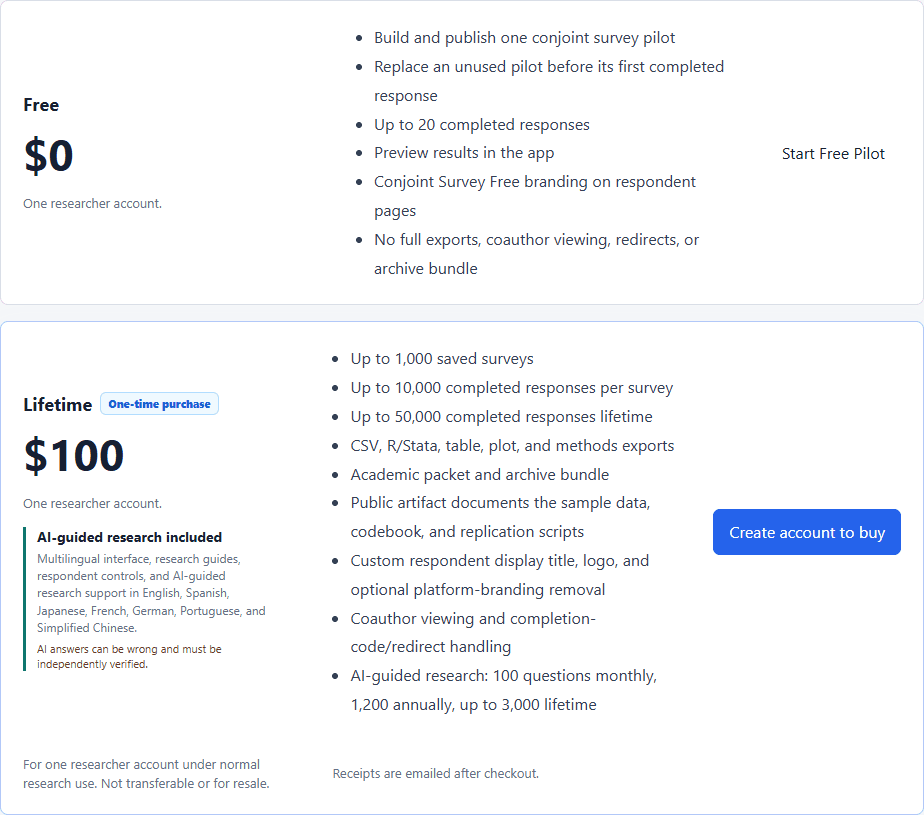
One-time pricing can be attractive for intermittent research, but it still comes with service terms and usage limits. Conjoint Survey defines Paid access as access for the lifetime of the service under posted plan limits.
What a Good Result Looks Like
A one-time purchase is valuable when its scope is clear: what features unlock, what usage limits remain, how long access lasts, and whether data and exports remain available. One-Time Payment describes the billing model; it does not imply limitless third-party compute or respondent recruitment.
Example: compare one-time and subscription costs
A researcher who runs one pilot now and revises the project next year may prefer a one-time license over maintaining twelve months of subscription access. Compare the break-even period, included support, response capacity, export access, storage terms, and the likelihood that the tool will be needed again.
Decisions to Make Before You Begin
- Read the plan limits and EULA before paying.
- Confirm whether access belongs to an individual or organization.
- Check how AI usage and other metered services are capped.
- Download durable research files at important project milestones.
Common Mistakes to Avoid
- Interpreting a One-Time Payment as unlimited external services forever.
- Assuming all future products or features are included.
- Leaving the only copy of study documentation inside any web application.
Your Practical Next Step
Compare the one-time price with the actual duration of your project and retain exported data, codebooks, and methods files as part of the research record.
A Quick Confidence Check
- Read the Paid access definition.
- Check usage caps.
- Confirm exports.
- Estimate repeated-study value.
- Review current terms.
- Keep local research archives.
Common Questions
Can I use this guide if I am new to this?
Yes. Researchers who prefer a predictable software cost for repeated studies, grants, consulting projects, or dissertation work. Follow the steps in order, start with a small test, and use the final checklist before you field or report anything important.
What is the simplest way to get started?
Begin by estimate how many studies you expect to run. Next, compare the full cost over the period you expect to need the software. You do not need to perfect every setting before running a small preview or pilot.
How do I know when I am ready?
Use the confidence check above. In particular: Read the Paid access definition. Check usage caps. Confirm exports. Estimate repeated-study value. When the decision is consequential, keep your study documentation and ask a qualified colleague or methods reviewer to examine the design as well.
Related Guides
Research artifact: sample data, codebook, and scriptsResearch Pathways
Product names and fielding platforms mentioned in this guide belong to their respective owners. Conjoint Survey is an independent academic research tool and is not affiliated with, sponsored by, or endorsed by those services.